Ontario’s 1873 Wilder Medals and the Origins of Pomology’s Highest Honour
By Denis Richard, Coin Photography Studio
October 16, 2025
🕒 5-minute read
In the late summer of 1873, fruit growers from across North America gathered in Boston for the 14th biennial meeting of the American Pomological Society (APS). The event marked both a quarter-century of the Society's existence and the debut of a new accolade: the Wilder Medal, named in honour of the Society's founder, Marshall Pinckney Wilder.
That year, in the Medal's inaugural presentation, three of the first Wilder Medals were awarded to a single exhibitor: the Ontario Fruit Growers' Association (now the Ontario Fruit and Vegetable Growers' Association). This remarkable triple recognition not only affirmed Ontario's status as a leader in North American fruit cultivation but also enshrined the Wilder Medal as the premier symbol of excellence in pomology.
The Wilder Medal: A New Standard of Recognition
Established in 1873, the Wilder Medal replaced the previous method of the American Pomological Society, which awarded stars to fruit varieties displayed at exhibitions. This change reflected the Society's aim to promote fruit cultivation as a national scientific and artistic endeavour. Designed by pomologist John J. Thomas and engraved by Henry Mitchell, the Medal is a striking object in its own right: the obverse features a high-relief portrait of Marshall P. Wilder, encircled by the founding date of the Society; the reverse displays a basket of fruit with a vine-and-leaf border, and space for the recipient's inscription.
Unlike previous prize systems, the Wilder Medal was not intended for mass distribution. It was created as a selective, enduring tribute to individuals and organizations that made outstanding contributions to fruit breeding, varietal introduction, or collection — a symbol of merit in the rapidly advancing world of 19th-century horticulture.
Marshall P. Wilder: The Man Behind the Medal
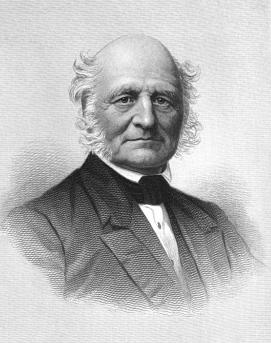
Born in Rindge, New Hampshire, in 1798, Marshall P. Wilder was a merchant, civic leader, and, above all, a horticulturist. After acquiring his Dorchester estate, Hawthorn Grove, Wilder immersed himself in fruit cultivation, experimenting with over 900 varieties of pears and pioneering camellia hybridization. His passion extended well beyond his own garden. In 1848, he founded the American Pomological Society to unify fruit growers across North America and encourage the scientific development of native fruit varieties.
Wilder's legacy was as organizational as it was horticultural. Under his leadership, the APS began cataloging and evaluating fruit cultivars from different regions, refining nomenclature, and disseminating standards. In his 1873 address, Wilder looked with satisfaction on the Society's impact: "Of the forty-three kinds of plums in our catalogue, more than half are American. Of fifty-eight kinds of peaches, more than two-thirds are American… thus may we go on rising higher and higher in the scale of excellence."
The Wilder Medal was created not only to honour his name, but to carry forward his ideals: disciplined evaluation, dedication to breeding, and the public celebration of horticultural progress.
1873: A Landmark Year in Fruit Culture
The APS's 1873 meeting, held in Boston's Horticultural Hall, brought together growers and exhibitors from across the United States and Canada. The fruit exhibition was expansive — and, according to contemporary reports, "magnificent." Despite a poor fruiting year in some states, the show hall was filled with abundant and artistic displays: pyramids of apples, trays of plums, carefully arranged grapes, and a dazzling array of pears.
The meeting marked several turning points. It introduced the Wilder Medal as a replacement for the "star" system, and passed a resolution to gradually remove previously starred fruit varieties from APS publications in favour of medal awards. It also confirmed a growing international scope, with substantial contributions arriving from as far afield as California, Utah, and the newly settled plains of Nebraska — not to mention the "British Provinces," including Ontario, whose contributions would prove historic.
Ontario's Triple Victory
Among the many societies represented, the Ontario Fruit Growers' Association was awarded three Wilder Medals for its outstanding fruit collections. The citations were as follows:
Best Society Collection of Native Grapes
Best Society Collection of Plums
Collection of Pears
Ontario's exhibit was both extensive and expertly curated. One account noted 157 grape varieties on display overall — a number unmatched in any previous APS exhibition — with Ontario providing a substantial portion. The judges praised the province's collection of native grapes, noting the exceptional variety and quality, which stood above all other society entries.
The plum exhibit featured 50 varieties, including hybrids and native cultivars, many of which were described as "very fine" by the committee.
The pears were equally impressive, competing in a category that included entries from Massachusetts and New York, where pear cultivation had deep roots.
These medals carried more than just horticultural weight. For a Canadian organization to sweep multiple categories at a U.S. national exhibition reflected not only the quality of Ontario's fruit but also the maturity of its pomological institutions. Founded in 1859, the Ontario association had quickly grown into a leading advocate for fruit growers in the province and was now a respected international presence.
The Medal Itself: Art and Symbolism
For medal collectors and design historians, the Wilder Medal is a striking object. The obverse features a commanding portrait of Marshall P. Wilder, modelled with classical dignity. The reverse — dominated by a fruit-laden basket and encircled by a wreath of assorted fruit-bearing plants — represents abundance, variety, and the fruits of labour, both literal and metaphorical.
Each Medal bears an engraved inscription naming the recipient and the reason for the award. Unlike many award medals of the period, which were often struck in bronze or tin, the Wilder Medal was traditionally minted in silver, befitting its role as the Society's highest distinction.
A Legacy That Endures
The Wilder Medal is the American Pomological Society's most prestigious honour. Its scope has evolved, expanding from recognition of individual fruit varieties to honouring lifetime achievements in research, breeding, and scientific advancement. Recent recipients include geneticists and breeding program directors who have developed cultivars now distributed worldwide.
Yet the core principles remain unchanged. The Medal celebrates the advancement of fruit growing as both a science and a cultural pursuit. And the 1873 Ontario triple award remains a landmark moment — not only as a rare achievement by a single exhibitor but as a symbol of international excellence, scientific collaboration, and horticultural ambition.
Acknowledgment
Special thanks to Jacob Lipson Rare Coins for generously providing access to his Wilder Medals for photography and research. His collection made it possible to illustrate and document these historic awards in detail, bringing to life the artistry and legacy of the 1873 medals featured in this article.
A Final Thought
Thank you for reading this blog post! I hope you found it informative and enjoyable.
If you're interested in similar topics, be sure to check out our other posts on numismatic subjects. From coin history to coin photography, we have lots to offer.
Don't forget to leave a comment below with your thoughts and feedback. We love hearing from our readers and it helps us improve our content.
Thank you again for your support and we hope to see you back here soon! Happy collecting!
Sources:
American Pomological Society – Wilder Medal in Pomology (History & Award description) americanpomological.orgamericanpomological.org
The Australasian (Melbourne) – report on the 1873 APS meeting (14th session) trove.nla.gov.autrove.nla.gov.autrove.nla.gov.au
Dorchester Atheneum – Clapp’s Favorite Pear (history and Wilder Medal recognition) dorchesteratheneum.org
The Daily Gardener – Marshall Pinckney Wilder biography excerpt thedailygardener.orgthedailygardener.org
The Portal to Texas History – Description of APS Wilder Medal design (T.V. Munson’s 1885 medal) texashistory.unt.edutexashistory.unt.edu
Fruit Growers News – “Breeder David Cain awarded 2020 Wilder Medal” (modern Wilder Medal context) fruitgrowersnews.comfruitgrowersnews.com
We’re Here to Help
At Coin Photography Studio, we understand that coins aren’t just commodities—they’re connections. To history. To moments. To people. That’s why we photograph coins the way collectors see them: with care, clarity, and a touch of reverence.
If you’re considering having your coins professionally photographed, we’d be honoured to work with you.
Ready to see your coins in a new light? Explore Our Services or Contact Us to start your project.